
In the rapidly evolving digital landscape, users increasingly rely on platforms to deliver not only services but also accurate, timely information. Data freshness has become a critical component in building and maintaining trust, as the relevance and currency of information often dictate user satisfaction and engagement. Platforms that can communicate the freshness of their data effectively signal reliability, encouraging users to make decisions with confidence. A central aspect of this dynamic is the implementation of clear, interpretable indicators that reflect the timeliness of data updates. These indicators can range from timestamps, visual cues, and metadata labels to real-time notifications that inform users about the state of the information they are consuming. The clarity and transparency of these indicators are crucial; ambiguous or inconsistent signals can erode trust rather than reinforce it.
For users, the perception of freshness is closely tied to expectations set by the platform’s context. In financial services, for instance, stock prices or cryptocurrency values that are even slightly outdated can lead to significant frustration or financial loss. Here, platforms often employ explicit time-stamping and automatic refresh cycles to maintain a sense of immediacy. In social or news media, the freshness of content affects engagement metrics, as users prioritize the latest updates over older posts. Platforms that fail to signal data recency clearly risk losing user attention and credibility. Thus, understanding the user’s expectations and the domain-specific consequences of stale data is essential in designing effective freshness indicators.
Mechanically, data freshness indicators rely on both backend and frontend mechanisms. On the backend, systems must track data ingestion times, processing latency, and update frequency. This requires robust monitoring pipelines that can calculate the age of each data item relative to its source and flag discrepancies or delays. Real-time streaming architectures, cache invalidation strategies, and automated update triggers all contribute to maintaining a platform’s overall data integrity. On the frontend, designers translate this backend intelligence into intuitive cues that users can quickly interpret. For example, color-coded badges, recency timestamps, or progress indicators communicate how current the information is without requiring users to understand the technical underpinnings. The design of these cues should balance informativeness with simplicity, ensuring that users are informed without being overwhelmed.
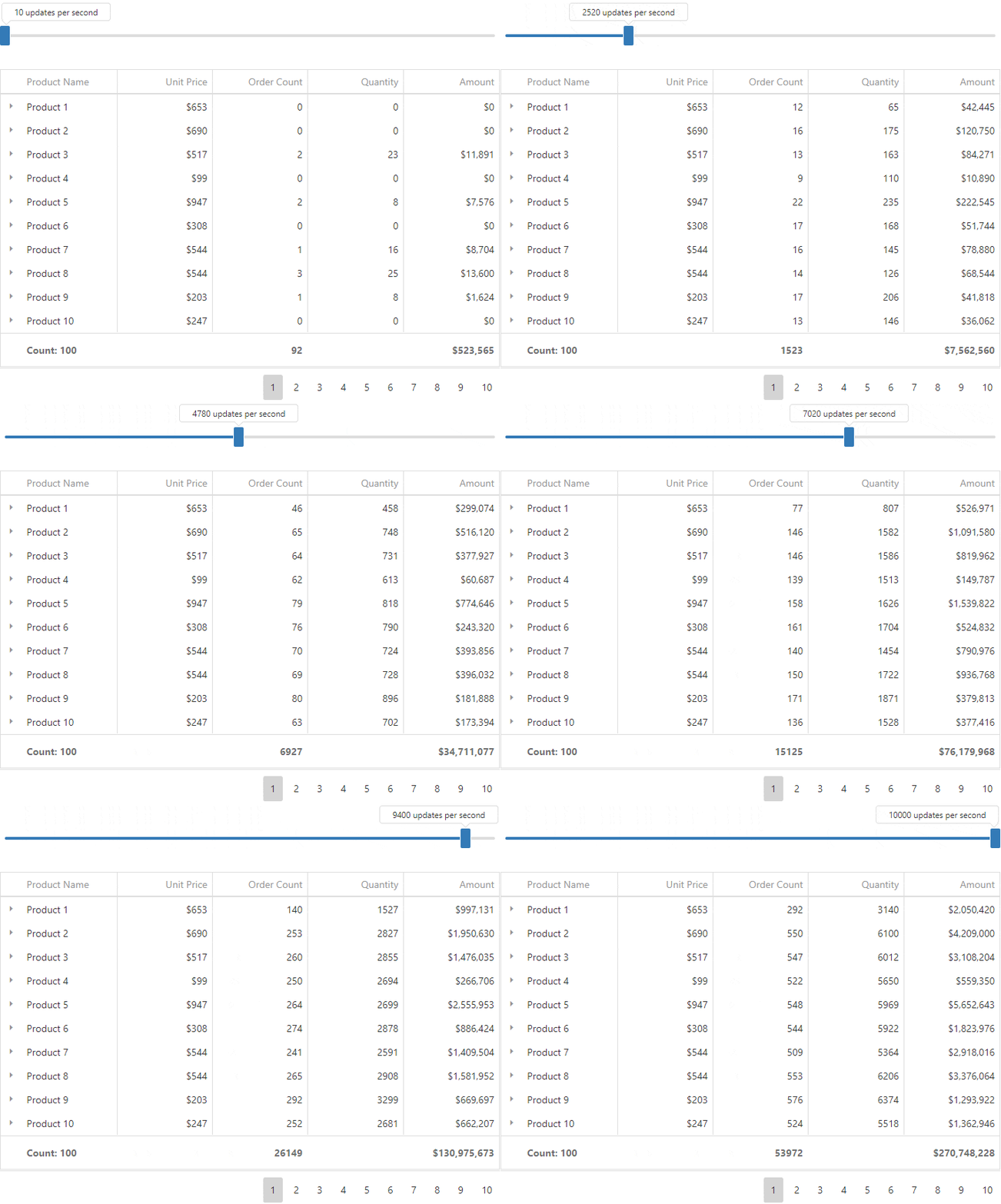
Another layer of complexity arises when data freshness varies across different types of content or services within the same platform. Users may encounter inconsistencies if one section of a platform is updated more frequently than another. To mitigate this, platforms often implement system-wide standards for freshness, or they make explicit distinctions for content categories, signaling different update cadences. For instance, a dashboard may indicate that financial data refreshes every second, while user-generated reviews update hourly. By making these distinctions clear, platforms manage user expectations and reduce cognitive friction, reinforcing trust through predictable behavior.
The psychological dimension of data freshness should not be underestimated. Users naturally assume that newer information is more accurate or relevant, even when the underlying data quality may not have changed. Therefore, platforms have a dual responsibility: not only to update data promptly but also to communicate these updates transparently. Misleading freshness indicators—such as showing a recent timestamp while the content itself is unchanged—can backfire, eroding credibility. Conversely, platforms that consistently demonstrate real-time accuracy cultivate a reputation for reliability, which can lead to increased engagement, loyalty, and advocacy.
Automation and intelligent signaling also enhance the efficacy of data freshness indicators. Machine learning algorithms can predict when data is likely to become stale, preemptively refreshing information or alerting users to potential obsolescence. Similarly, platforms can employ adaptive indicators that reflect both the absolute age of data and its relative importance, highlighting updates that materially affect decision-making while minimizing noise from trivial changes. In this way, data freshness is not merely a static metric but an active component of user experience design, guiding attention and facilitating informed choices.
Platforms must also consider the broader ecosystem in which they operate. APIs, third-party data providers, and distributed systems all introduce latency and variability in data timeliness. Effective freshness indicators must account for these complexities, signaling not just the age of the data itself but also its provenance and reliability. Users increasingly expect context-aware signals that allow them to assess the credibility of information sources quickly. By integrating provenance metadata and update histories into freshness indicators, platforms can provide a richer, more trustworthy user experience.
Ultimately, data freshness indicators are a cornerstone of trust in digital platforms. They operate at the intersection of technology, design, and psychology, translating backend data processes into user-facing cues that support confident decision-making. Platforms that invest in clear, consistent, and intelligent freshness signaling are more likely to foster sustained engagement, loyalty, and user satisfaction. Conversely, neglecting this dimension can undermine credibility, frustrate users, and reduce platform adoption. As digital ecosystems grow in complexity and users demand ever-more real-time interactions, the ability to communicate data freshness effectively will remain a defining feature of trusted, high-performing platforms.
This emphasis on transparency and clarity extends beyond immediate user interaction. It influences how external stakeholders—partners, regulators, and analysts—perceive the platform. In industries where compliance and accountability are critical, well-implemented freshness indicators demonstrate operational rigor and responsible data stewardship. They provide evidence that the platform not only delivers timely information but also monitors and validates its data flows continuously. In this sense, data freshness is both a functional and symbolic element of trust, reinforcing credibility internally and externally.
The ongoing challenge lies in balancing technical feasibility, cognitive load, and contextual relevance. Platforms must continually evaluate the effectiveness of their freshness indicators through user feedback, engagement metrics, and error analysis. Iterative refinement ensures that these signals remain meaningful, reducing uncertainty while avoiding information overload. By approaching data freshness as a multidimensional design problem, platforms can craft experiences that not only meet user expectations but also strengthen trust, reliability, and overall platform integrity in a competitive digital environment.




Leave a Reply